Senses Series, Part Four: Sight and Hearing - Designing an Environment That Works With You
Autism · ADHD · AuDHD · Neurodivergent · Sensory Profile · NST
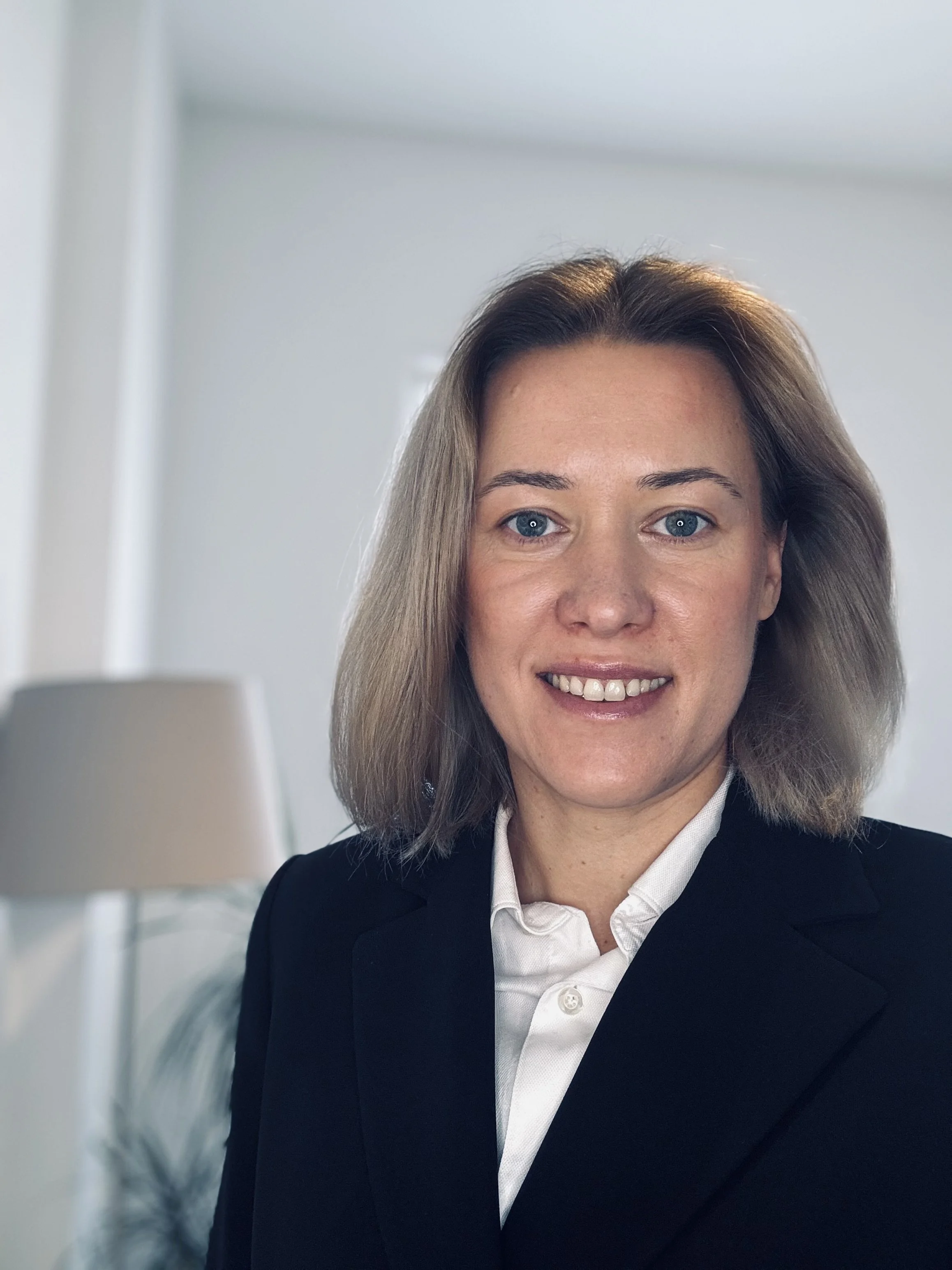
A little of myself, first
I'm sensitive to light and noise: genuinely, physically sensitive, not just "prefer things calm." In a restaurant with background chatter, I can lose someone's voice entirely, even sitting right across from them; it isn't that I'm not listening, it's that my brain isn't filtering the foreground from the noise around it the way a lot of people's does. I use loop earplugs often, and I'd rather remember to bring them than not. But I'm also a seeker, and specifically for warm light: golden light, glittery light, the kind that glimmers rather than glares. And none of it is constant. I can go to a gig, stand in the noise, be fully present for it and then I need a day, sometimes two, of quiet to recover afterward. That rhythm: go, then rest is as much a part of my sensory profile as the sensitivity itself.
I'm telling you this because sight and hearing are the two senses in this series where I think a client benefits most from seeing that a real clinician has a real, unglamorous, sometimes inconvenient profile too and manages it, rather than being fixed by it.
Two senses, one shared challenge: they're both environmental
Every other sense in this series is something you carry with you. Sight and hearing are different - they're the two senses most shaped by whatever room you happen to be in, which makes them the two senses most within your control to actually design around, whether that's a therapy room or your own home.
Applying the threshold-and-response model
The same framework from earlier in this series applies here, sense by sense:
Sight:
Visual seeking: drawn to bright, varied, or richly textured visual environments; may find plain or dim spaces understimulating.
Visual low registration: may not notice visual changes in an environment (rearranged furniture, a new object) that others pick up immediately.
Visual sensitivity or avoiding: discomfort with bright or fluorescent light, visual clutter, or flickering; often prefers dim, warm, or minimal-clutter environments.
Hearing:
Auditory seeking: drawn to music, ambient sound, or environments with more auditory input; may find total silence uncomfortable rather than restful.
Auditory low registration: may not notice sounds others react to immediately (a phone ringing, someone calling their name).
Auditory sensitivity or avoiding: discomfort with loud, sudden, or layered sound; often needs quiet environments or tools like earplugs to manage input.
As with touch and location on the body, both of these senses can show real variation within themselves. My own profile - light-sensitive but seeking warm and glimmering light specifically, noise-sensitive but not evenly across all sound - is a completely ordinary example of that. It's rarely "sensitive to everything in this category" or "seeking everything in this category." It's usually more specific, and more interesting, than that.
Two different auditory problems that get conflated
One distinction I think is genuinely underexplained to clients: sound sensitivity and sound filtering are not the same mechanism, even though they often travel together and get lumped under "sensitive to noise." Sensitivity is about how intensely a sound registers. Filtering is about your ability to pick a foreground signal (someone's voice) out of a background of competing sound (restaurant chatter) and current research describes difficulty filtering background noise as one of the more consistent auditory features across autism specifically, distinct from simple loudness sensitivity. That's precisely my restaurant experience: it isn't that the noise is too loud, it's that my brain isn't sorting foreground from background the way the room assumes it will. Naming that distinction for clients tends to be genuinely relieving, it explains why "just turn it down" was never actually going to solve the problem.
Recovery isn't a failure of coping - it's part of the strategy
The rhythm I described earlier - going to a loud gig, then needing real recovery time afterward - is worth naming explicitly as a legitimate strategy, not a deficit. Current research increasingly frames sensory over-responsivity through the lens of impaired habituation: the nervous system doesn't adapt to repeated stimulation the way a less sensitive system does, so exposure has a real physiological cost that accumulates rather than fading. Planning for recovery before the loud event, not just recovering reactively afterward, is a genuinely evidence-informed strategy, not an excuse or a limitation to apologise for.
Designing the therapy room
A few choices I make deliberately in my own practice, worth naming explicitly rather than assuming clients will ask:
Warm, adjustable lighting over fluorescent or harsh overhead light. Fluorescent lighting is a common trigger, and one of the easiest environmental factors to control entirely.
Asking about background noise tolerance before the first session, not assuming. A client who can't filter background noise may need a different room, different seating, or advance warning about building noise.
Offering earplugs or noise-reducing options openly, rather than waiting for a client to request them, normalising the tool removes the burden of asking.
Allowing genuine recovery time between sessions when possible, especially for clients doing intensive sensory or intimacy work, treating post-session depletion as expected, not as something to push through.
Where this shows up in psychosexual and relationship work
Lighting and sound shape intimacy directly, and differences here get misread relationally more often than almost any other sense in this series:
A client needing dim or warm lighting during intimacy isn't necessarily being modest or avoidant, bright or harsh light may be genuinely dysregulating, independent of body confidence.
A client who becomes distracted or withdrawn during sex when there's background noise (a TV in another room, traffic outside) may be experiencing the exact same foreground-filtering difficulty I described about restaurants - not disinterest, and not being "in their head."
A partner who wants music or ambient sound during intimacy and a partner who wants silence aren't in conflict about romance, they may simply be at opposite ends of the auditory-seeking spectrum, and naming that tends to de-escalate the disagreement faster than negotiating over "what's romantic."
Recovery needs apply here too: a client who wants quiet, low-stimulation time after intimacy isn't withdrawing from their partner emotionally, they may be doing exactly what I do after a gig.
Map yourself: the companion tool
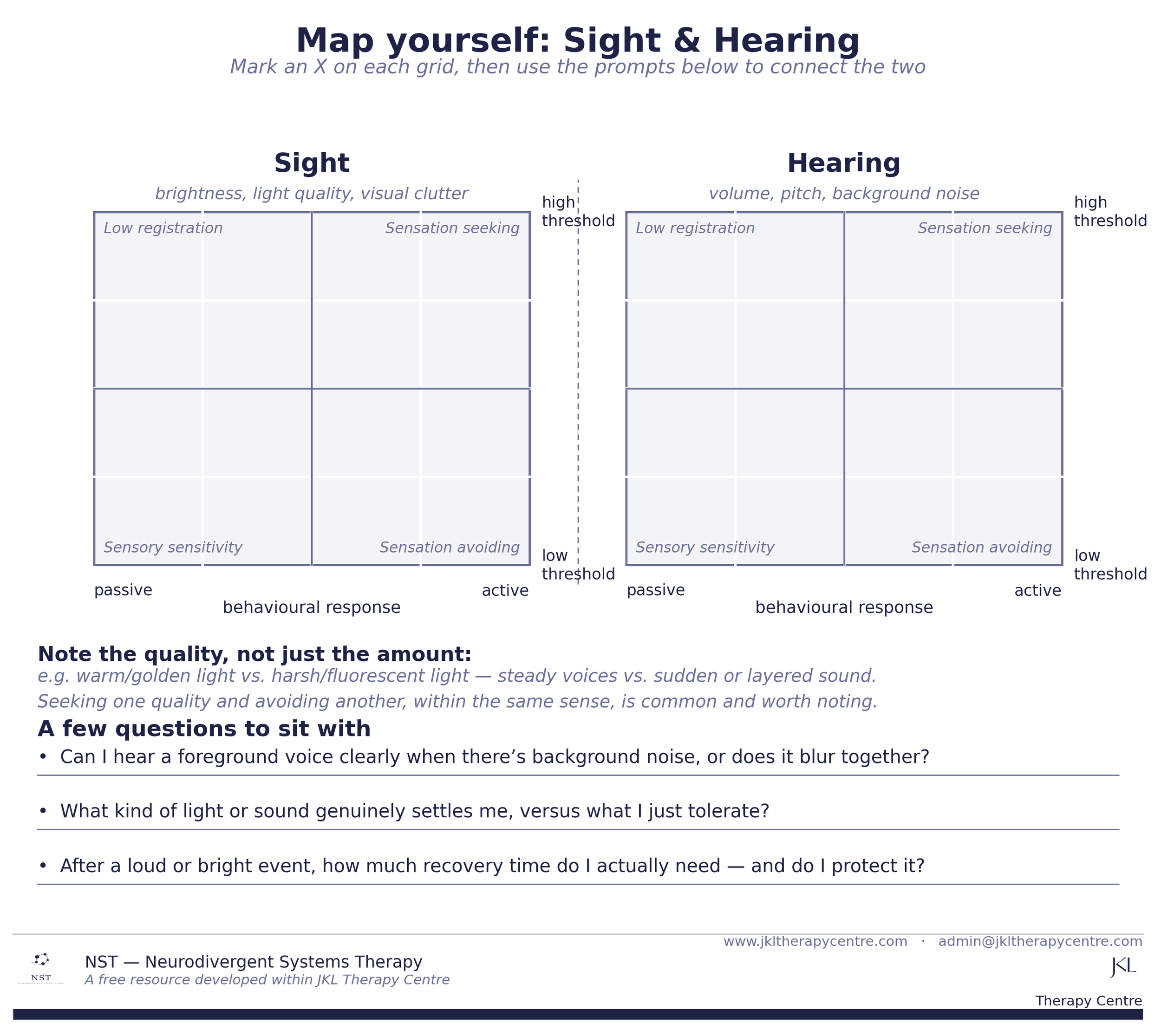
As with the rest of this series, there's a free worksheet for mapping your own sight and hearing profile, including space to note not just seeking versus avoiding, but the specific qualities (warm versus harsh light, which kinds of sound versus others) that make each sense more particular than a single label can capture.
What's next
The next instalment turns to taste and smell, the two senses most overlooked in psychosexual work specifically, despite their direct relevance to arousal, aversion, and intimacy.
References
Light and sound hypersensitivity in autism spectrum disorder: a systematic review focusing on age and gender bias. PubMed (2026 — reviewing studies 2015–2025).
Poulsen, R., Williams, Z., Dwyer, P., Pellicano, L., Sowman, P. F., & McAlpine, D. (2024). How auditory processing influences the autistic profile: A review. Autism Research.
Auditory environments influence the link between autistic traits and quality of life. Scientific Reports (2025).